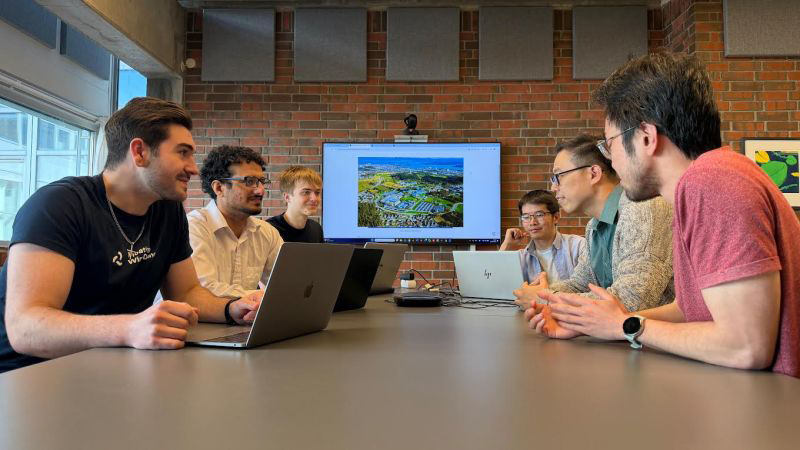
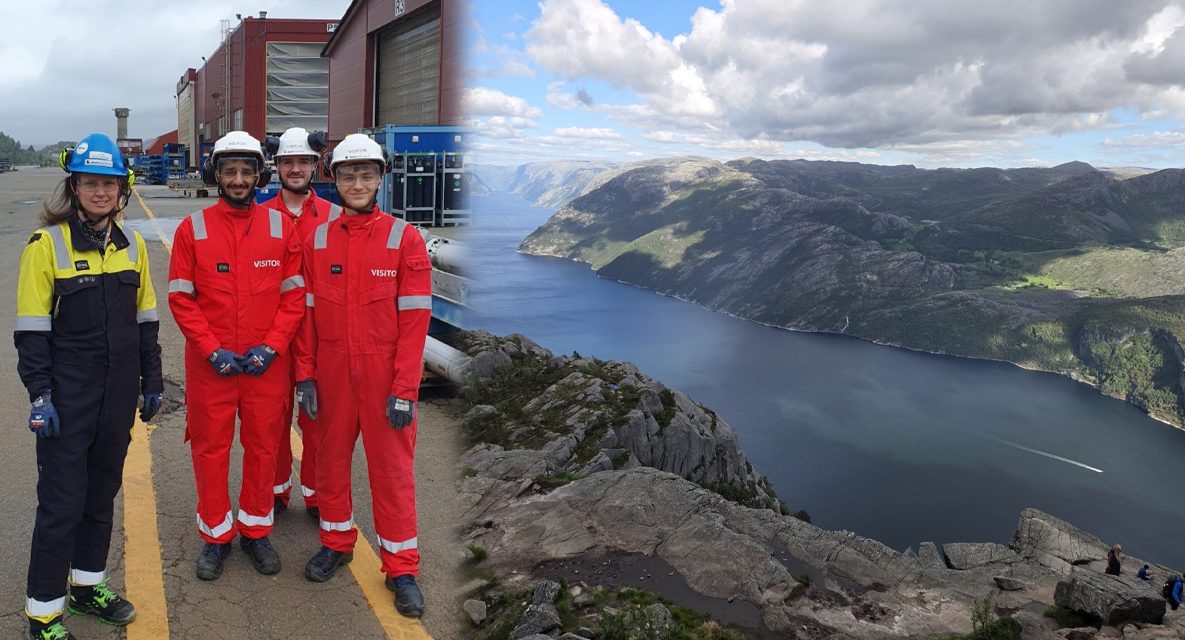

Three College of Staten Island Engineering students spent five weeks in Norway this summer gaining hands-on research experience in renewable energy, offshore wind technologies, and their inter-connection to the established oil and gas industry through a partnership with the University of Stavanger.
Hussam Ali, John Fusco, and Aleksey Moshkov traveled to Stavanger, Norway, where they worked alongside Professor Muk Chen Ong and other leading researchers in the field to examine the rapidly developing field of floating photovoltaic (FPV) engineering, an electric power system that turns sunlight directly into usable electricity.
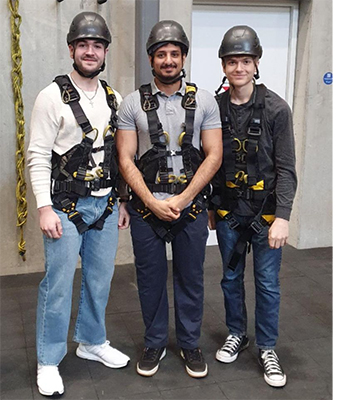
Their research focused on several key components of floating photovoltaic systems, including mooring and anchoring systems, connectors, and flotation technologies. The students also examined the economic considerations associated with these components, including their relationship to the calibrated cost of energy.
“The Engineering and Environmental Science Department places great emphasis on internships and real industry skills that lead to jobs and this collaboration brings so much hands-on experiences for the students in their pursuit of amazing technical jobs in the engineering fields,” said Dr. Neo Antoniades, Professor and Chairperson of the Engineering and Environmental Science (EES) Department at CSI. “Our collaboration with the University of Stavanger, a leader in Norwegian inter-connection to the gas and oil industries is critical, not only for the technical knowledge, but for the interactions, relations, and networking opportunities it affords our students.”
The experience gave the students an opportunity to explore the intersection of renewable energy research with Norway’s longstanding expertise in the oil and gas industry. Through extended research interactions with Dr. Atle Blomgren and the Norwegian Research Centre (NORCE) team, the students were introduced to advanced technologies and research taking place across the energy sector.
At NORCE, the students toured the Ullrigg Test Centre, a state-of-the-art drilling rig and testing facility where rotary steerable drilling systems were developed. Technologies pioneered through this type of research have contributed to advances in the offshore oil and gas industry and have also helped inform the development of floating turbines and other renewable energy technologies.
The students’ visit coincided with the annual Floating Wind Days conference in Stavanger, which brings together researchers, engineers, industry professionals, and company executives working in floating wind and renewable energy. In addition to attending presentations from experts from around the world, the CSI students had opportunities to network with technical personnel and industry leaders.
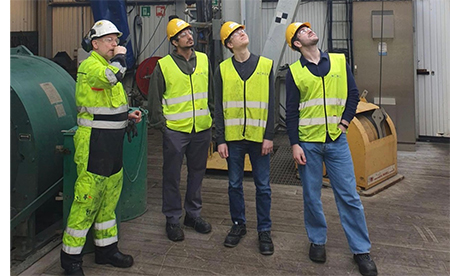
The students also visited a floating wind turbine near the island of Utsira, where they learned about technologies and practices designed to make the inspection, maintenance, and repair of offshore turbines smarter, cleaner, and more cost-effective.
“The internship in Norway provided an invaluable opportunity to work with professors and PhD researchers in a highly professional environment,” said Aleksay Moshkov on his experience. “Through their mentorship, I deepened my understanding of optimization strategies for floating offshore wind turbines while developing essential research, collaboration, and professional communication skills. This experience significantly enriched both my academic perspective and professional growth.”
Aleksay noted how critical it was to get hands-on experience in the real world and work alongside some of the world’s finest engineers in the field. Fellow attendee John Fusco agreed. “Seeing the oil industry adapt to the floating energy scene was also a unique experience as you see experienced engineers in one field use their expertise to develop a new field. The experience taught me how to research evolving fields and draw concrete conclusions from limited information,” he said.
Beyond their academic and research activities, the students immersed themselves in Norwegian culture. Their experiences included a visit to Sverd i Fjell (Swords in Rock), a landmark monument commemorating the unification of Norway, as well as a traditional fjord sauna experience that combines the heat of a sauna with the surrounding cold waters.
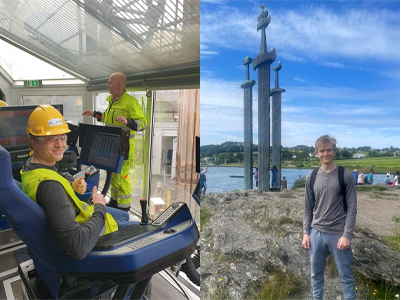
“Some of the most memorable moments of the trip were when we saw the wind turbines in person floating on the water and seeing the downtown area flooded with Norwegians in their World Cup jerseys,” John said. “Norway itself is a very beautiful country with extraordinary nature.”
The experience provided the students with an opportunity to strengthen their research skills while working with international researchers and gaining firsthand exposure to emerging energy technologies. Dr. Dwight Richards, Professor in Engineering and Environmental Science who joined the students during their first week in Norway, remarked, “It was a pleasure to meet outstanding researchers there, and I was struck by the students’ drive and the remarkable work they completed over five weeks.”
“We have been the recipient of significant funding in the areas of renewable energy, smart grid, energy generation and distribution and we aspire to lead the way in technical research on Staten Island,” said Antoniades. “This partnership with Stavanger is only strengthening our students’ career readiness in this critical fields.”
The incredible student international research experience was made possible through the generous support of The Robert O’Mara Fund at CSI.