Trailblazing Program Has Expanded College Access, Support to Students from Underrepresented Communities Since the Civil Rights Era; Colleges Highlight Anniversary with Campus Celebrations
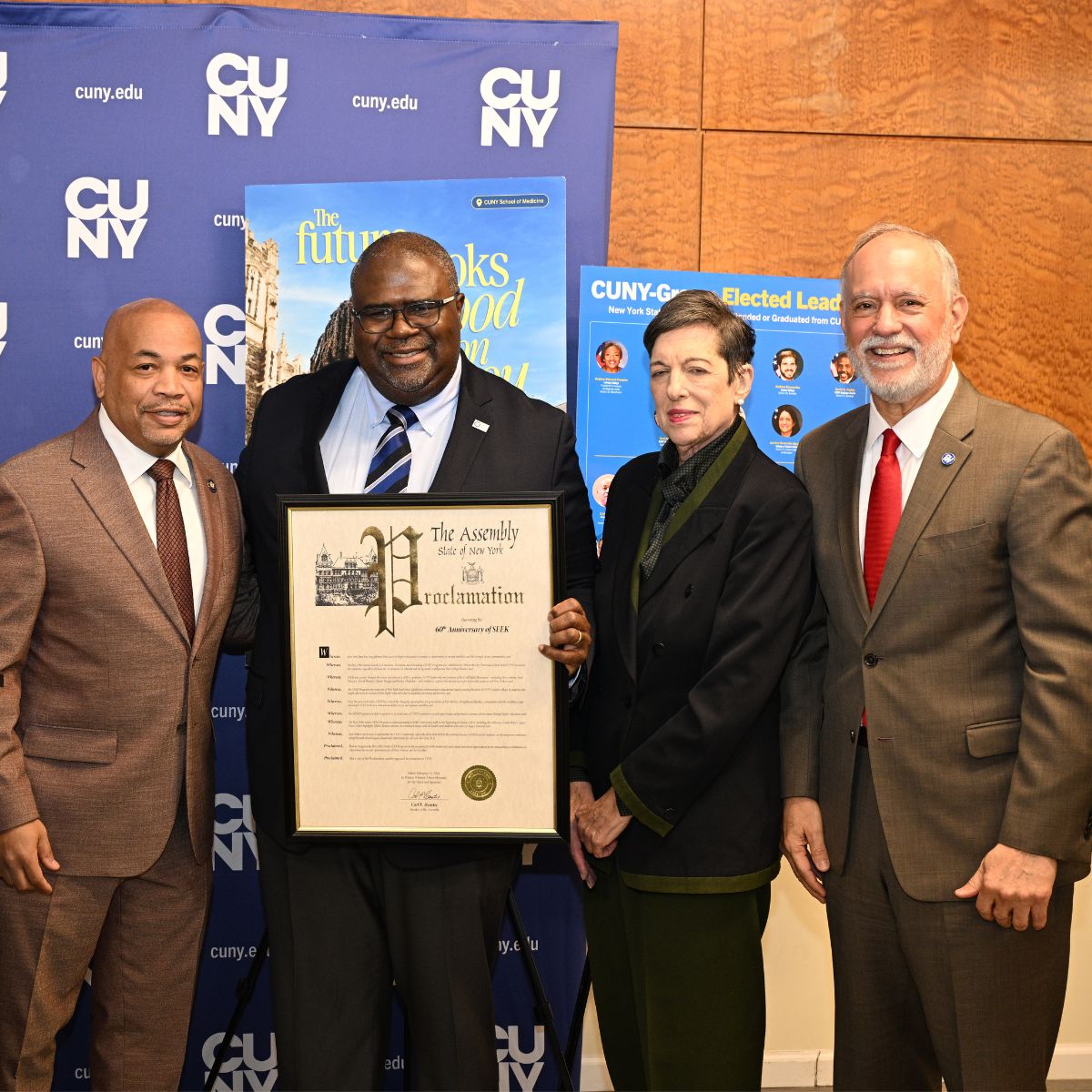
CUNY Chancellor Félix V. Matos Rodríguez marked the 60th anniversary of the Percy Ellis Sutton Search for Education, Elevation and Knowledge (SEEK) program – the nation’s first state-funded academic opportunity initiative – at the CUNY Caucus lunch in Albany on Feb. 14, celebrating a pioneering CUNY initiative that has expanded college access and provided crucial support for upwards of 100,000 students from underrepresented communities since 1966. The luncheon was attended by New York City Mayor Zohran Mamdani, State Attorney General Letitia James, State Comptroller Thomas DiNapoli, Senate Majority Leader Andrea Stewart-Cousins, Assembly Speaker Carl Heastie, Deputy Secretary for Education Maria Fernandez, Assembly Member Alicia Hyndman, Assembly Member Michaelle Solages, New York City Public Advocate Jumaane Williams, New York City Comptroller Mark Levine, and New York City Council Speaker Julie Menin. It kicked off a year of celebrations for the SEEK program, with colleges throughout the University hosting events to mark the milestone.
“SEEK has been a cornerstone of CUNY’s mission to support New Yorkers and serve as a beacon for upward mobility,” said Chancellor Matos Rodríguez. “The program has served as a launchpad for many students who may not otherwise have been able to attend college and earn degrees that open pathways to careers and economic mobility. I am proud of the work that SEEK has accomplished and the ways it has adapted over the past 60 years to support the changing needs of our students.”
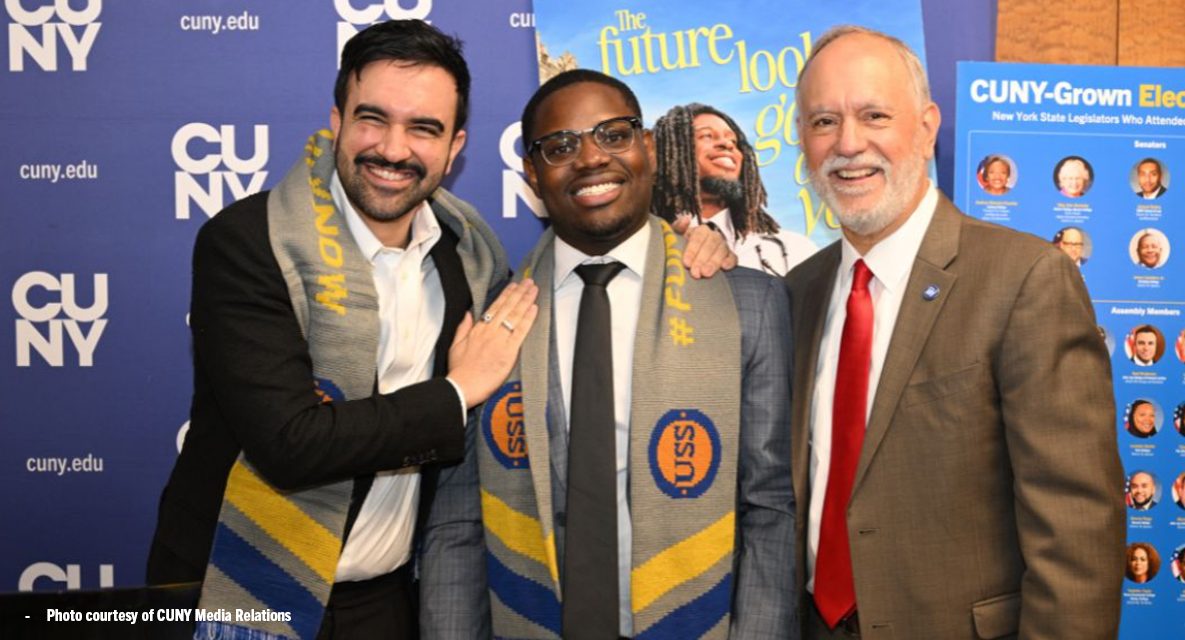
The lunch featured about 20 students currently enrolled in the SEEK program, including a mentor and mentee who spoke about how SEEK shaped their educational experiences.
“The community is really what makes it such a great program, especially because everyone comes from a similar walk of life. They know where you’re coming from,” said Michael Valero, a SEEK student mentor at York College. “Being a SEEK student has made me more aware of what other students are going through – a lot of them don’t know about different academic policies or how to navigate their classes. Being a SEEK student has always been helpful, because the advisors and counselors show you how to do all of that.”
Following the luncheon, 100 SEEK students participated in an anniversary event that included workshops, networking events and professional development sessions. The celebration at the Huxley Theater of the New York State Museum featured a fireside chat with Deputy Manhattan Borough President Keisha Sutton-James, granddaughter of Percy Sutton, a founder and legislative architect of the program when he was a member of the State Assembly.
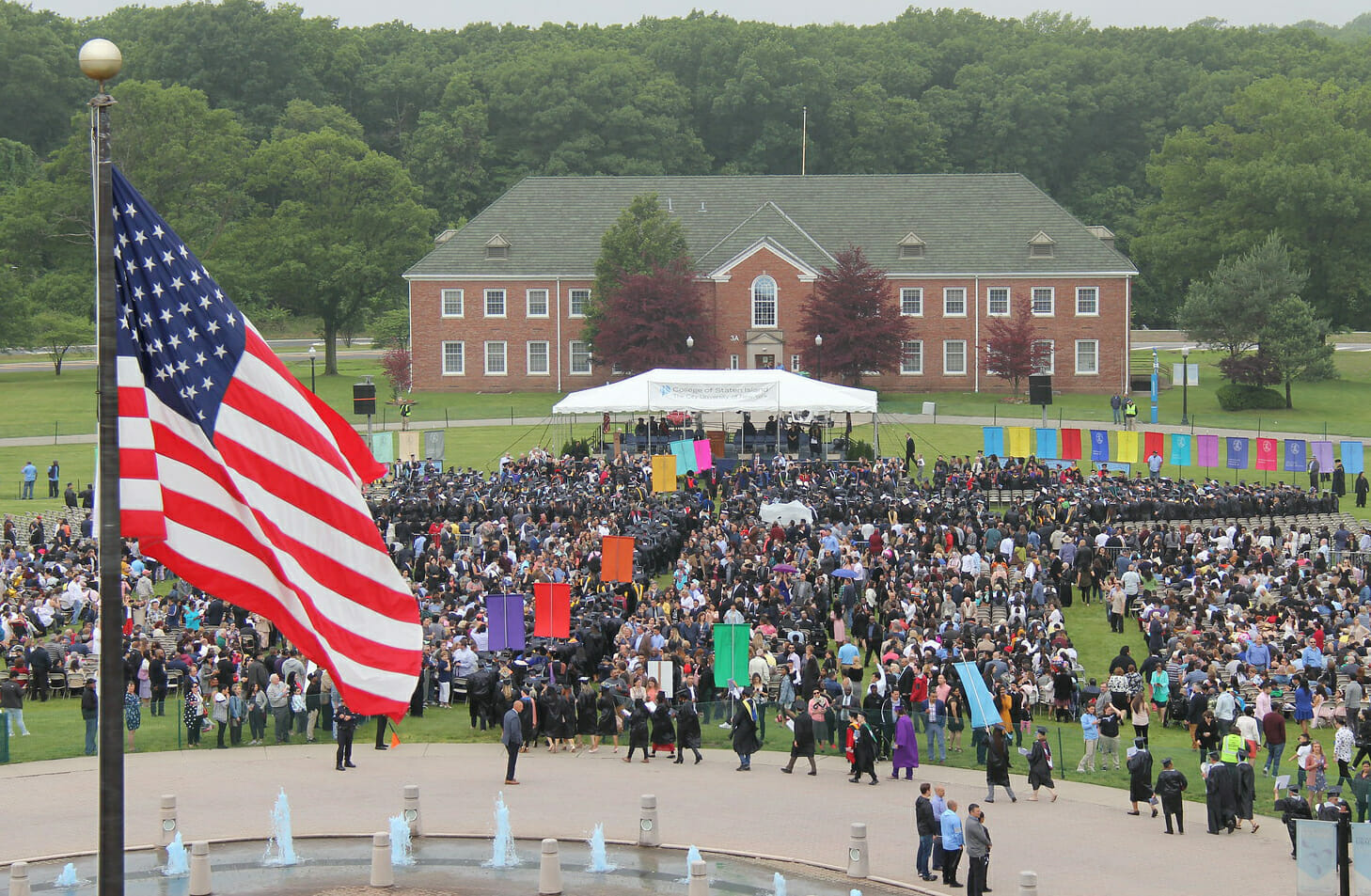
Colleges across the University system are marking the occasion with on-campus events, including a marathon quilt-making workshop at Brooklyn College for SEEK students and alumni, a week of SEEK student skill building at the College of Staten Island, and several events welcoming back alumni to celebrate the success of the program.
60 Years of Supporting Students
SEEK emerged from the Civil Rights movement and student activism in the 1960s that called for greater equity and access in higher education. It was first established as a pilot program at City College in 1965 to boost enrollment of Black and Hispanic students, who at the time made up less than 5% of the University’s total enrollment. The first cohort included 113 students who were enrolled through an alternative admissions pathway and provided with resources including individualized courses taught by specially trained teachers to help them succeed.
A year later, the initiative was signed into law as the nation’s first state-funded academic opportunity program. The legislation was made possible through the leadership of Assembly Members Sutton and Shirley Chisholm, a Brooklyn College alumna who later became the first Black woman elected to Congress and, in 1972, the first Black candidate to seek a major party nomination for president. The success of SEEK is due in part to College Discovery, a CUNY program that was introduced in 1964 to provide a lifeline to marginalized students at two-year colleges, and which laid out the groundwork for the current SEEK program. SEEK has helped inspire similar programs, including the Educational Opportunity Program (EOP) at SUNY in 1967.
Sixty years later, the impact of the program is evident across the University: over half of CUNY students are Black and Hispanic. SEEK has served hundreds of thousandsofstudents and provides a range of resources that include tutoring tailored to their academic needs, financial assistance, personalized counseling, and career guidance. Since 1990, over 60,000 associate and bachelor’s degrees have been earned through the program. In 2023, SEEK launched the Innovative Career Opportunity and Research Program, an initiative which brings research experience and graduate school preparation to up to 150 undergraduate SEEK students.
“If I wasn’t a SEEK student, I don’t know what my college experience would be,” said Natasha Danrahj, a former SEEK mentee who is now a mentor at York College. “I work at SEEK, I met my friends through the summer program – I don’t think I would have the foundation I do without it.”
SEEK alumni include Elias Alcantara, who served under President Obama as senior associate director of intergovernmental affairs; Congress Member Adriano Espaillat, who entered college through SEEK as an undocumented immigrant; Davidson Cassagnol, a hardware design engineer at Eaton; and New York State Assembly Member Khaleel Anderson, who represents District 31 in Queens.
“The SEEK Program has been more than just an academic support system for me. It was an early investment in my potential. It challenged me from day one, strengthened my academic skills, and helped me understand how to navigate spaces that can feel unfamiliar or intimidating at first,” said Assembly Member Khaleel Anderson. “SEEK didn’t just prepare me to succeed at Queens College, the SEEK Program helped shape how I approach learning, advocacy, and public service. It reminded me that opportunity and support can change the trajectory of someone’s life, and that’s something I carry with me every day in my work as an Assembly Member.”
Research has shown that SEEK has a lasting impact on students’ long-term success. A Stanford University study tracking more than 10,000 CUNY SEEK graduates found that they earned significantly more annually in their late 20s and early 30s – on average up to $4,000 more – than academically similar students who did not participate in the program.
“SEEK has changed the lives of generations of CUNY students who were told that higher education was out of reach,” said Senator Toby Ann Stavisky, Chair of the Senate Higher Education Committee. “I have seen how SEEK opens doors for first-generation and working-class students and helps them stay the course once they get there. We should be proud of what SEEK has done for countless families and we must continue to strengthen it for the next generation of students.”
“As Chair of the Higher Education Committee, I am reminded daily that access, not ability, is the deciding factor in a student’s success. For 60 years, SEEK has dismantled barriers by pairing student determination with the financial and academic support needed to thrive,” said Assemblywoman Alicia L. Hyndman, Chair of the Assembly Committee on Higher Education. “Born from the Civil Rights movement and the legislative vision of Assembly icons like Percy Sutton and Shirley Chisholm, SEEK has advanced real equity and transformed the lives of hundreds of thousands of New Yorkers. As we celebrate this milestone in Albany, I congratulate the generations of educators and students who have made this program a beacon of upward mobility.”
– CUNY Media Relations