As you prepare for the final weeks of the Spring 2026 term, I write with important information and updates.
This week was full of significant events both on and off campus. The 50th iteration of the Percy Ellis SEEK program’s annual recognition of student achievement was one highlight—many thanks to Director Stephanie Allen and her team for inviting me to Tuesday’s celebration, and the opportunity to share words of congratulation and encouragement. The SEEK program, now in its 60th year, is a true embodiment of CUNY’s mission of access and excellence, providing transformational educational opportunities for hundreds of students. Speaking of excellence, Thursday brought the annual Staten Island Advance “Women of Distinction” luncheon, where notable locals were feted for a lifetime of achievement and accomplishment. The event is a highlight of the spring and featured a pair of CSI students who were selected for scholarships based on their academic merit and community involvement. Congratulations to nursing students Nadia Lula and Alina Velianyk for being recognized and for the impactful work they do in the broader Staten Island community, and to the Advance for making this possible! Keeping with the theme of celebrations, that afternoon I attended the investiture ceremony for Dr. Suri Duitch, who was installed as the eighth president of Kingsborough Community College. It was good to see so many colleagues there and to support one of our largest feeder institutions.
I am pleased to announce that pending Board of Trustees approval, Dr. Thomas Tressler-Gelok will join CSI as the next Vice President of Student Affairs, effective June 15. Dr. Tressler-Gelok (who goes by Tommy) most recently served as Dean of Campus Life at Wagner College, where his portfolio included Student Engagement and Activities, Residential Education, Health and Wellness, Spirituality, and Global Education. Tommy brings more than two decades of higher education experience, including a background in Title IX, career readiness, and campus life, which will serve him—and CSI—well. I want to thank those on the search committee and all who participated in the process for your thoughtful and important feedback. Special thanks to co-chairs Jonathan Peters and Carlos Serrano. Finally, thank you to Interim VP Ruta Shah-Gordon for her work and efforts as she heads (back) into retirement after nine months of service to CSI!
I want to directly address concerns surrounding my decision to pre-record student commencement speeches. I begin by acknowledging the passionate opposition to this decision and by affirming that I have listened carefully to the many viewpoints expressed. I want you to understand, this is not a decision I have made lightly. And I made it not only as President of this institution, but also as someone who has served as a faculty member, as Provost, and as a parent who has proudly attended the graduations of my own children. I fully understand that people may disagree—and that is both expected and healthy in a democracy that values free speech.
That said, there are responsibilities associated with this role that weigh heavily on me. As President of the College, I bear ultimate responsibility for protecting this institution; safeguarding our students, faculty, and staff; preserving our reputation; and ensuring the long-term future of this campus. These responsibilities, particularly those related to safety and security, are ones I take extremely seriously. Having seen the unintended consequences of off-script commencement speeches unfold at many respected peer institutions across the country—including within our own system— I felt strongly that pre-recording student commencement speeches was the most responsible way to achieve that objective.
As I have demonstrated throughout my tenure here, I fully support free expression and protest, in accordance with CUNY policies. I have consistently defended this right within our community, including in discussion with community and public leaders, and I have never shied away from that responsibility or protecting this principle. However, at the same time, commencement is governed by time, place, and manner expectations. Off-script or politically charged remarks—regardless of what “side of the fence” or viewpoint—can overshadow and disrupt the most significant academic event and celebration of the year for our graduates and their families, something I truly believe most of us do not want to see happen. And as we have seen, live, unscripted remarks carry inherent risks, including audience disruption, safety concerns, and reputational and financial implications for the institution, affecting community trust, donor and governmental relationships, and ultimately enrollment. They can also have—and have had—unintended, and at times significant, consequences for student speakers themselves, including impacts on future employment opportunities, personal safety, and career paths. These are real risks that I believe demand careful, thoughtful, and deliberate consideration by this institution.
It is my honest opinion that pre-recording student speeches significantly reduces these risks while ensuring a safe, inclusive, and celebratory environment for all attendees. It helps protect the integrity of the ceremony and ensures that the focus remains where it belongs—on honoring our graduates and their achievements. This is their day, and the reason we all do what we do. In my opinion, we should never detract from that moment for our students—or the families and our faculty and staff who supported them—especially after the extraordinary effort it took for everyone to get there.
As previously stated, this year, the valedictorian and salutatorian will deliver pre-recorded remarks that are vetted and approved, consistent with longstanding practice. To be clear, draft speeches and interviews have always been required as part of the selection process to ensure that remarks align with the celebratory nature of Commencement and are consistent with students’ interview responses. As we have traditionally done in previous years, staff will work closely with the selected students to fine-tune and enhance their pre-approved speeches prior to Commencement. The only difference to student speeches this year, like last, is that these speeches will be pre-recorded and played at Commencement as opposed to being delivered live.
More importantly, we need to move forward as planned this year as students applied for these honors knowing in advance that speeches would be pre-recorded, demonstrating that this policy did not deter participation and, in some cases, expanded access for students who might not otherwise have applied. And yes, there are additional benefits as well: pre-recording also improves accessibility, provides necessary contingency planning for unforeseen circumstances (such as illness or emergencies, which we have dealt with in the past), and ensures a consistent, professional presentation that supports the smooth flow of the ceremony. Additionally, these recordings allow us to memorialize a meaningful moment that can be shared beyond Commencement, for recruitment, alumni engagement, and donor relations. While those benefits were not central to my decision to pre-record, they were considerations, and they are something I feel should be taken into consideration as we discuss the future of Commencement.
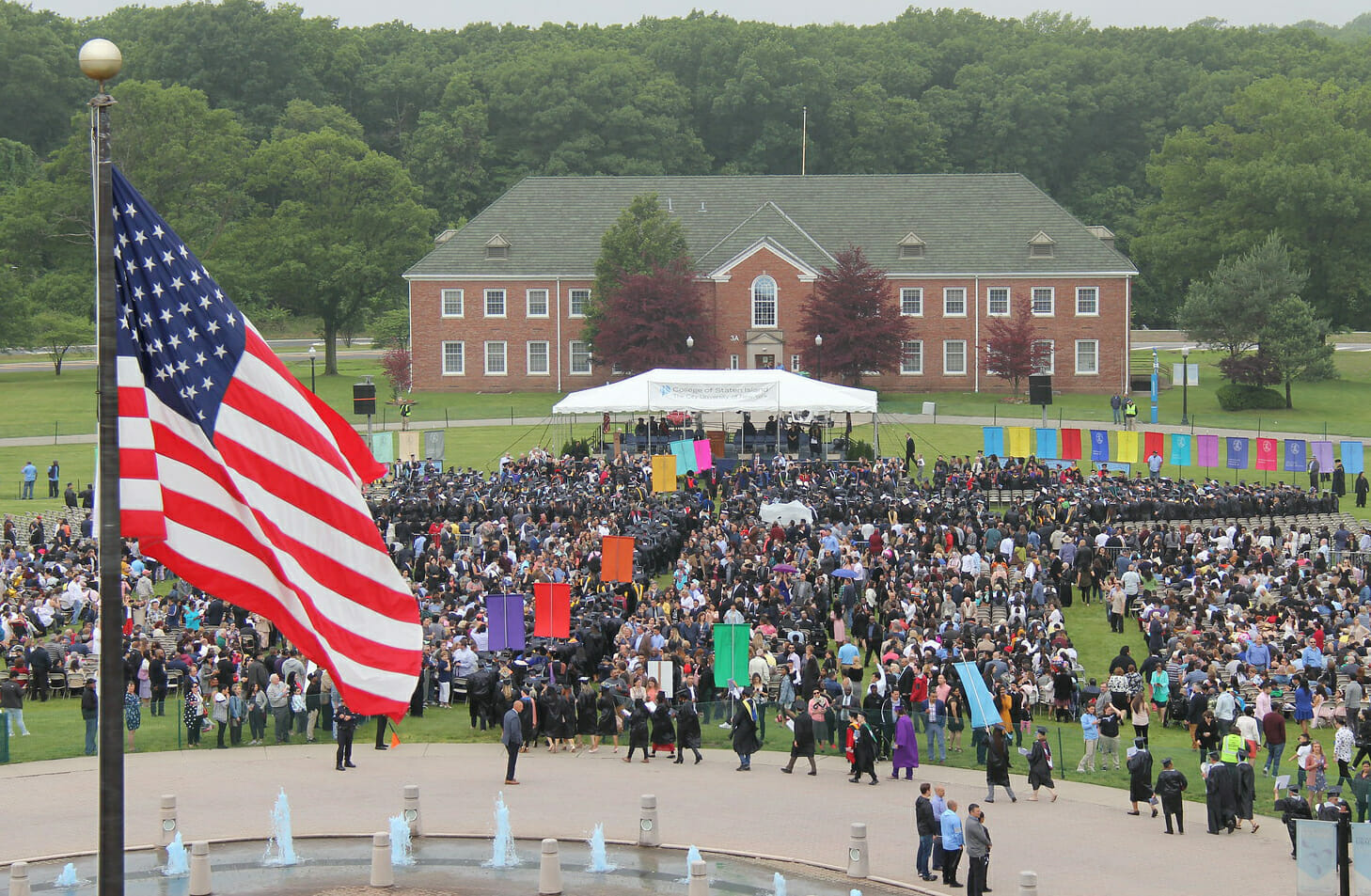
All that said, I am deeply appreciative of the many constructive suggestions and recommendations that have been shared, some of which I have adopted. Central to this feedback is my commitment to establish a Commencement task force beginning this fall. The task force will undertake a comprehensive review of Commencement planning for 2027, including the venue, speeches, departmental ceremonies, Dolphin Awards, name reading and stage crossing, and other key components. This commitment is one I intend to honor.
Ultimately, my foremost responsibility is the safety and security of our campus community. I believe strongly that pre-recording student Commencement speeches best fulfills that obligation while preserving the purpose and dignity of this important ceremony.
I hope that we can move forward together in a spirit of mutual respect and shared commitment to student success, with a clear path for thoughtful evaluation of future Commencement ceremonies. Above all, Commencement should remain what it is meant to be: a day dedicated to celebrating our students and honoring their hard-earned achievements. I truly believe who can all agree on that.
Thank you all for your passion and commitment to the College and our students. I hope you have a restful weekend, and I look forward to the many celebratory events in the weeks ahead as we honor and recognize our graduates, culminating in the most meaningful day of the academic year.
Finally, Happy Mother’s Day to all who celebrate. I hope you take the time to relax and enjoy your day—you have most certainly earned it.
Until next time,
Timothy G. Lynch, Ph.D.