Three-Year Project Will Establish Unified Access to Collections
Archives Include One of the Country’s Largest Collections of Boxing Memorabilia, a Century of Jewish History and Unparalleled Repositories of Afro-Caribbean Cultural Artifacts
CUNY Has Also Made 300,000 Digital Records Available Online for the First Time in Partnership With Platform JSTOR
The City University of New York today announced that it completed the first full-scale survey of its extensive archival collections. Overseen by the CUNY Office of Library Services, the Cultivating Archives & Institutional Memory project is a three-year initiative supported by a $2 million grant from the Mellon Foundation. By 2027, all these archives will be in a centralized hub where students, historians and the public can find them. They include photographs, news clippings, oral histories and other materials dispersed across 26 campuses and numerous cultural centers.
“The history of CUNY is a history of New York and the nation. Our extensive trove of archival photos, clippings and records tells a story of which we’re a part and which we have an obligation to preserve for future generations,” said CUNY Chancellor Félix V. Matos Rodríguez. “As a historian and former CUNY research center director, I know how impactful our archives can be to the community and I look forward to seeing the University continue that legacy of service as a critical resource for educators, historians and the public.”
In partnership with the JSTOR Digital Stewardship, a digital platform designed to help libraries and archives preserve and share their collections, CUNY has also made more than 300,000 digital records publicly available online for the first time.
54,000 Boxes, 9 Miles, A Single Point of Entry
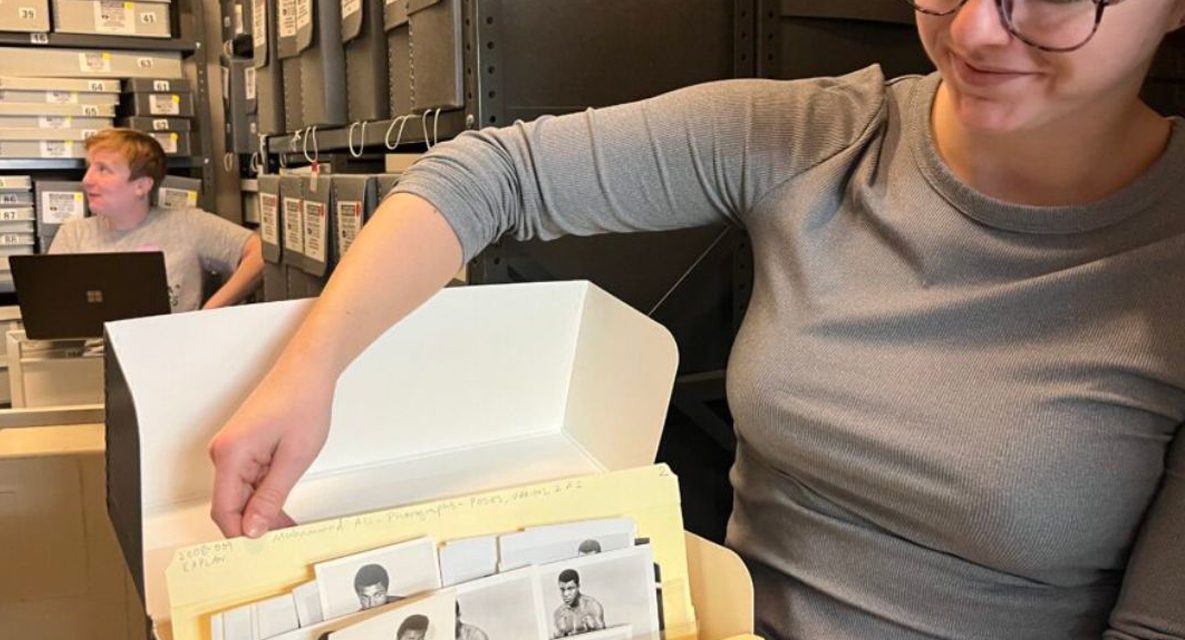
Since April 2024, the CUNY Office of Library Services engaged a team of 12 archivists to travel to every campus in all five boroughs to scour archives held on-site. The team – the first and largest of its kind at the University – surveyed more than nine miles of material encompassing 54,000 boxes and 59,608 media carriers such as 16mm films and VHS tapes. The team is implementing unified archival platforms, making it easier to discover and access the 179-year history of CUNY as well as local topics of collecting. CUNY has also launched a faculty fellowship to incorporate these archival resources across the curriculum.
“We are excited for the opportunity to raise awareness across New York City about CUNY’s history, especially with the millions of New Yorkers who are current and former students,” said CUNY University Archivist Natalie Milbrodt. “I believe it’s CUNY graduates who keep our city running, and their stories are held with care in CUNY’s archives. I feel so proud, personally, to be part of CUNY’s legacy as its University archivist and as an alumnus.”
Items found among the archives include:
Knockout Boxing Collection: The Hank Kaplan Boxing Archive, donated by Brooklyn native Hank Kaplan, is one of the largest boxing archives in the United States. Covering 200 years of history, it features 500,000 rare prints, over 1,200 posters, 300 audio and videotapes, reams of correspondence, and over 100 boxes of memorabilia items -including a heavy bag used by Muhammad Ali.
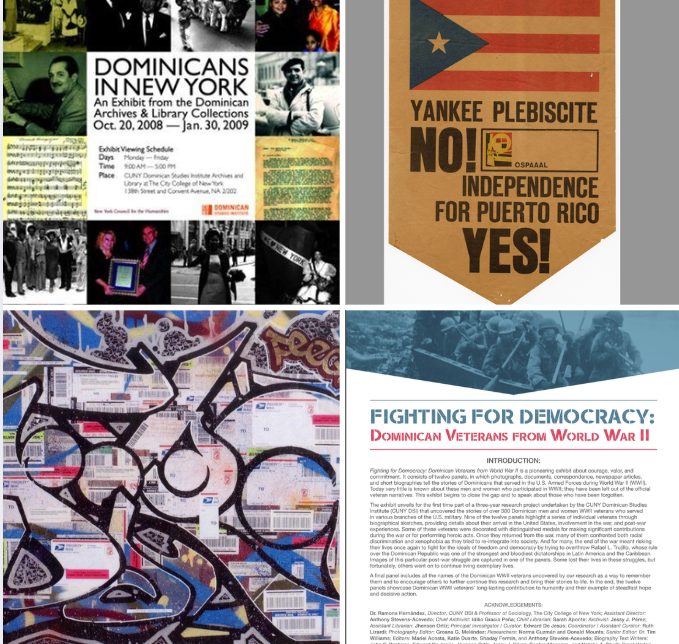
The Afro-Caribbean Diaspora: CUNY is also home to unrivaled collections capturing the experiences of millions of individuals of Caribbean heritage living in the U.S. The Center for Puerto Rican Studies at Hunter College (CENTRO) is the nation’s only repository committed to documenting Puerto Rican communities living in the U.S. It features over 300 collections of personal papers from prominent Puerto Rican artists, elected officials and social activists. The Dominican Studies Institute at City College is the first and only of its kind outside the Dominican Republic. Their “Dominican Artists in the United States” collection features 448 items, including the works of Reynaldo García Pantaleón, a Dominican American visual artist whose works have been displayed at the Metropolitan Museum of Art and the Renwick Gallery at the Smithsonian.
Jewish Life and Lineage: Across multiple archives are extensive materials depicting New York’s diverse Jewish communities. Brooklyn College’s collections include the personal papers of Susan Alter, the first Orthodox Jewish woman elected to the New York City Council. Brooklyn also houses footage from “A Life Apart,” a 1997 documentary about Hasidim in America. Queens College features photos documenting Romaniote Jewish communities in the U.S. and Greece.
Pursuit of Justice: The archives offer a rich collection documenting the role of New Yorkers in the fight for equal rights. Queens College’s collection features original photos depicting student involvement in the Civil Rights Movement, including during the Mississippi Freedom Summer, when volunteers traveled south to rebuild churches burned down by white supremacists. The CUNY LGBTQIA+ Consortium, housed at LaGuardia Community College, serves as a steward for New York’s LGBTQIA+ history, including the papers of Daniel Dromm, a former New York City Council member and founder of the Queens Lesbian and Gay Pride Committee. Additional archives can be found at CLAGS: The Center for LGBTQ Studies at the Graduate Center, the first university-based research center in the United States dedicated to the study of LGBTQ individuals and their communities.
The survey has also enabled the archivists to build research guides that connect materials between campuses. The guides allow students and researchers to find, access and utilize materials spread across the system. For example, SEEK in CUNY Archives offers a dedicated overview of materials concerning the Percy Ellis Sutton Search for Education, Elevation, and Knowledge (SEEK) and College Discovery (CD), which were established to ensure that all students, regardless of background, had equal access to a CUNY education. The guide was created to advance scholarship focused on SEEK and its creation.
![Staten Island-based NYC streetwear brand offers opulent line of hats and hoodies [features CSI Business alumnus Frank Fallacaro]](https://csitoday.com/wp-content/themes/Extra/images/post-format-thumb-text.svg)
![NYC $112.4B budget includes $$$ for housing, early childhood education, libraries, health care [Staten Island Advance]](https://csitoday.com/wp-content/uploads/2024/07/Advance-Adams-Budget-440x264.jpg)