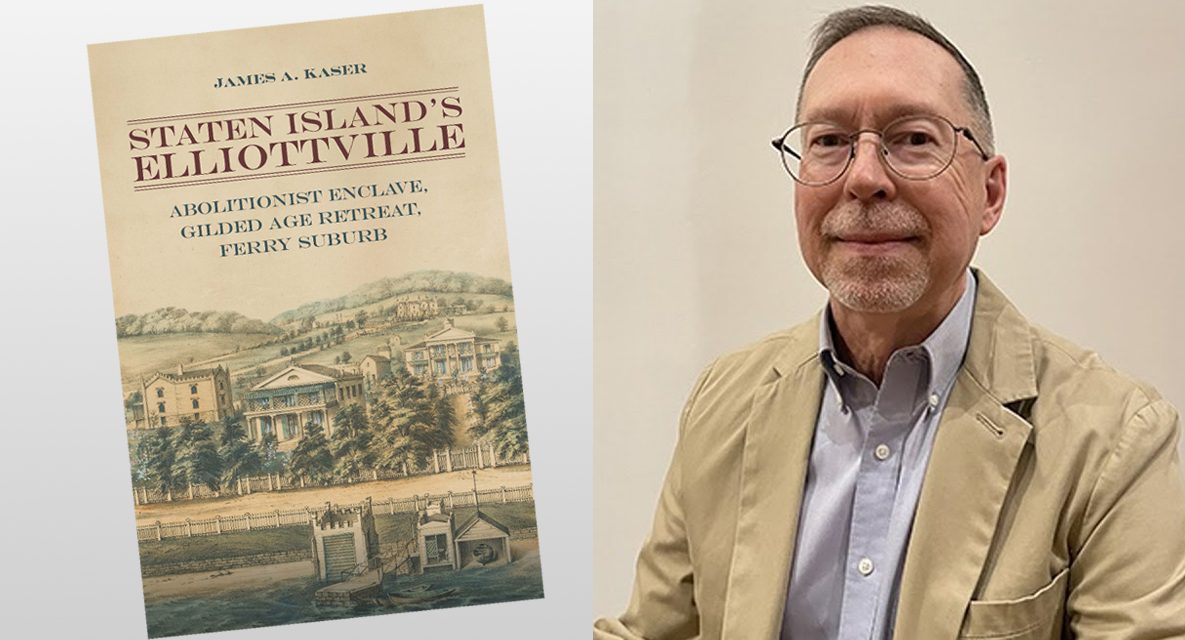
A compelling new work by CSI Professor and Archivist Dr. James A. Kaser is shining a spotlight on a long-forgotten chapter of Staten Island history and its outsized influence on major national movements of the 19th Century.
Staten Island’s Elliottville: Abolitionist Enclave, Gilded Age Retreat, Ferry Suburb explores the vibrant story of Elliottville, a mid-19th-Century Staten Island community that became a nexus for abolitionists, reformers, transcendentalists, and literary figures. Drawing on a wealth of archival research, Dr. Kaser’s book traces five decades of community life, illuminating how this small enclave became connected to broader currents of U.S. social and cultural change.
For more on the book’s release and local reaction, see the SI Live article here: New book recalls lost neighborhood’s role in abolition movement.
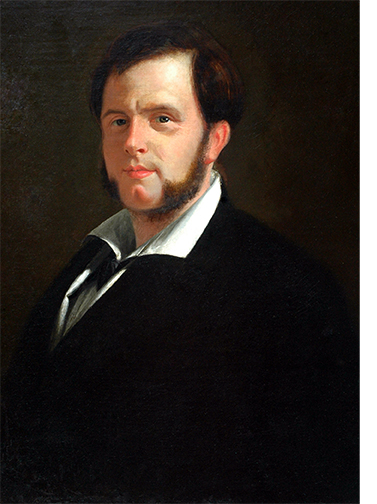
Painting attributed to John James Audubon. Cindy Livingston, photographer. Collection of Elliott descendant Stephen Livingston.
Settled in 1839 by New Englanders with ties to American thinkers and activists, Elliottville became home to influential figures such as editorialists Sydney Howard Gay and George William Curtis, Civil War heroes like Robert Gould Shaw and Theodore Winthrop, and writers including Anna Leonowens.
Beyond its notable residents, the community stood out for its firm commitment to Abolition, women’s rights, economic reform, and political activism at a moment when much of New York City was ambivalent or hostile to such causes. The story of Elliottville reflects how a small, interconnected community could contribute to national debates and movements.
Dr. Kaser’s book is the culmination of over a decade of meticulous archival digging, exploration of unique cartographic and manuscript sources, and engagement with previously overlooked documents that bring Elliottville to life.
“I began research in 2014, before I had a book project in mind, simply because I wanted to learn more about Elliottville,” Dr. Kaser said. “Once I decided to write a book, I knew the challenge would be to find documentation for community life and friendships. Fortunately, bodies of potentially useful correspondence survived in archives, even though only a tiny percentage proved directly relevant to my research. Over the decade-long project, I read hundreds of pages of manuscripts and thousands of pages of printed text. Although references to Elliottville were fragmentary and scattered, I gathered enough material to write a narrative history that presents four eras in neighborhood life and covers the decades between 1840 and 1900.”
He also reflected on what drew him to this story: “I liked the idea of uncovering and expanding history that had only been partially recorded and not fully understood. Local historians knew about Dr. Elliott and that the Bard Avenue neighborhood had been settled by abolitionists; however, they did not realize the extent to which the built environment expressed deeply held social reform commitments based on the philosophies of architect William Ranlett that were echoed and further articulated by Alexander Jackson Downing. Some of the most important aspects of the neighborhood–the houses, streets, and gardens–had been entirely ignored. There had also been no consideration of Elliottville’s identity as a suburb of affiliation with people choosing to live there because they wanted to be connected with other residents. No one had explored the importance of neighborhood life for these residents. Social life revolved around attending the local Unitarian church and gathering in each other’s homes for book club discussions, political meetings, musical evenings, dances, dinners, and teas provided the emotional support that enabled residents to devote themselves to social reform causes disdained by society at large.”
While history often focuses on locally prominent individuals and families, Staten Island’s Elliottville offers a nuanced portrait of a community that significantly contributed to national social reform movements. Elliottville embodied progressive ideals long before they became widely embraced.
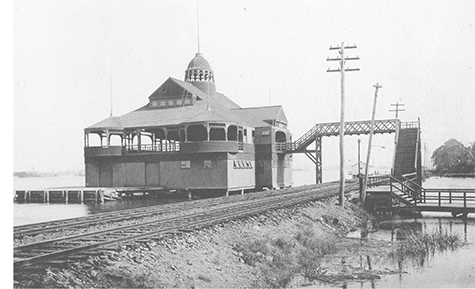
Edwin S. Marsh, Art Work of Staten Island, Chicago: W. H. Parish, 1894, unpaginated.
“The story of Elliottville echoes one of the broadest themes in U.S. history: the idea that the American continent offered an unparalleled opportunity to perfect human society. The men and women who settled in Elliottville took great pride in the history of the previous 200 years, during which their ancestors had settled a new continent and established a democratic society that was a model for the rest of the world,” Dr. Kaser noted. “They believed that abolishing slavery would be their contribution. Most Staten Islanders and New Yorkers were against abolitionism for a variety of reasons that unthinkingly stemmed from economic anxieties. Elliottville residents were often discouraged, but never hopeless. They never isolated themselves from the outside world, but constantly found ways to engage with their political enemies. One resident, the orator and political commentator George William Curtis, was the best example of this. He believed that by fully engaging his interlocutors and readers he could convince them of the truth.”
Published by State University of New York Press, the book is available in hardcover, paperback, and digital formats.
Dr. Kaser hopes the published work will foster new interest in Elliottville and inspire a museum exhibition. “There is a rich material culture connected to the people and themes of the book, including portraits, photographs, letters, printed materials, and even artifacts. For instance, floor plans exist for some of the Elliottville houses and from letters, we are even able to reconstruct the broad range of plants residents grew in their gardens,” he said. “As a public historian, I am always thinking about ways to engage with a general audience and would like to partner with a museum or local history organization to put together an exhibition about Elliottville.”
The College of Staten Island will also host related talks and events where Dr. Kaser will discuss his research and the community of Elliottville in greater detail.