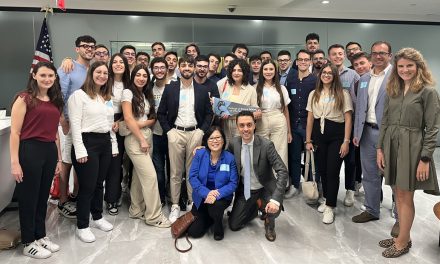
On Apr. 15, 2026, the College of Staten Island’s English Language Institute (ELI) transformed the 1C Green Dolphin Lounge into a vibrant crossroads of the world for its Spring Culture Day — a beloved tradition that brings together students, faculty, and guests to celebrate the diverse cultures that make up the ELI community.
The event, themed “Embracing and Celebrating Diversity,” drew an audience that was treated to an extraordinary morning of student presentations, cultural discoveries, and a festive multicultural potluck. Representation spanned four continents: students from China, Colombia, the Dominican Republic, Ecuador, Kazakhstan, Mexico, Palestine, Peru, Russia, Thailand, Türkiye, Uzbekistan, Venezuela, and Vietnam each took the stage to share a piece of their home country with the room.
Culture Day is a cornerstone of the ELI’s approach to language learning, which puts students in real-life situations where they must use English to communicate, persuade, and connect. Students develop their presentations in their Listening and Speaking Communication classes, rehearsing their speeches and polishing their slides until they are ready to perform before their classmates and invited guests.
A Morning of Highlights
After words of welcome from the ELI Director and instructors, students took the floor one by one — and the depth and creativity of their presentations made clear just how much thought and preparation had gone into the event.
The Chinese delegation offered one of the morning’s most visually striking moments, presenting on Yinggewu, a traditional percussive performance tradition involving hundreds of performers who parade through celebrations in choreographed formations with rhythmic steps and movements rooted in ancient ritual.
Julissa from the Dominican Republic wowed the room with a sophisticated multimedia video she produced herself, weaving together facts, images, and music to bring her island home to life — including the historic distinction that the Dominican Republic is home to the first cathedral built in the New World, and the country’s proud legacy of world-class athletes and musicians.
Aseel from Palestine shared a deeply personal and beautiful cultural tradition: the bridal henna ceremony, in which the wife and her mother decorate the groom’s hand with intricate henna artwork as a symbol of their union. Aseel arrived adorned in her own splendid traditional gold wedding jewelry, to the visible delight of everyone in the room.
Nicolas from Colombia didn’t just talk about his culture — he danced it. His salsa performance brought the room to its feet and gave everyone a felt sense of Colombia’s irresistible rhythmic spirit.
Serik from Kazakhstan delivered a compelling presentation on his country’s nationally supported chess youth development initiative, titled “A Young Talent Support Program, or How Kazakhstan’s Youth Team Became the Best in the World.” The program, backed by hundreds of government grants for training, has elevated Kazakh youth chess to the top of the world rankings and stands as a model of strategic national investment in young talent.
Thidarat from Thailand introduced the audience to the magical Loy Krathong festival, in which participants craft beautiful floating lanterns from flowers and set them adrift on water as a gesture of gratitude and letting go.
Irina from Russia brought attendees to the remote Siberian city of Yakutsk — the only major city in the world built entirely on permafrost — sharing what daily life looks and feels like in one of Earth’s most extreme environments.
Evelyn from Mexico offered a warm and personal reframing of the Day of the Dead, describing it not as a somber occasion but as a joyful family reunion across the boundary between the living and those who have passed on.
Daniela from Peru transported the room to the mountaintop citadel of Machu Picchu, painting a vivid picture of the ancient Incan wonder that continues to captivate the world.
Sofia from Ecuador explored her country’s remarkable linguistic diversity — while Spanish predominates, indigenous languages including Quechua and Shuar remain vital, reflecting Ecuador’s rich multiethnic heritage.
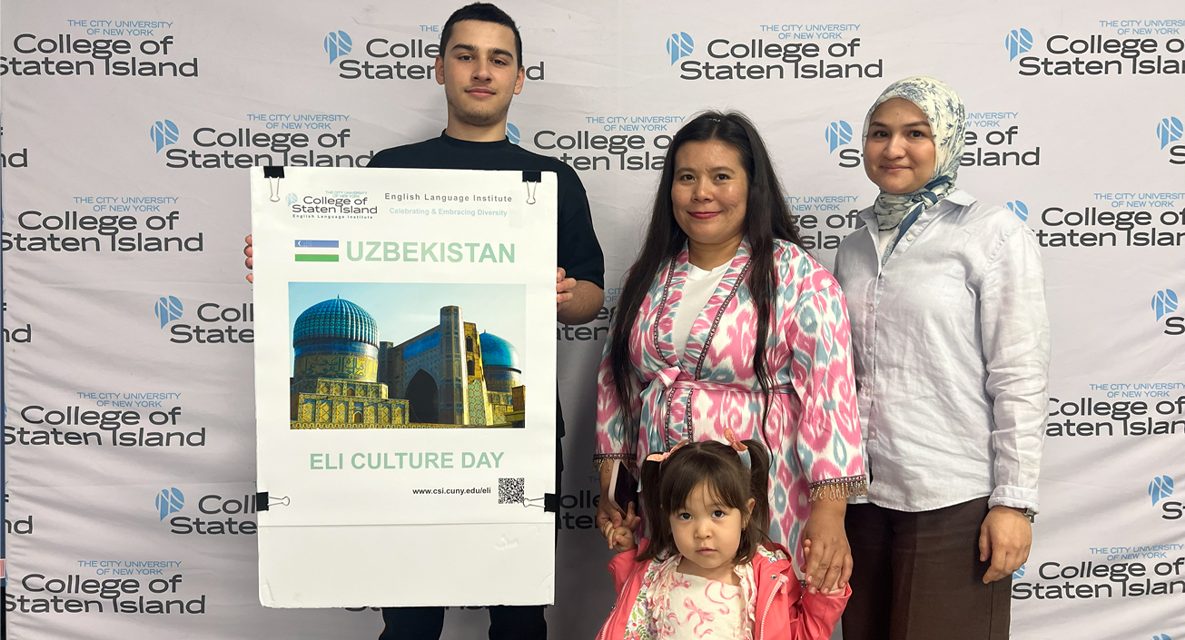
The Uzbekistan contingent took us to Tashkent, Central Asia’s largest metropolis, offering a window into a dynamic city where ancient Silk Road history and modern ambition coexist.
The presentations on Türkiye, led by Zafer and Ezgi, explored the country’s extraordinary layering of civilizations across millennia and its continued relevance as a geopolitical crossroads between East and West.
And Thuy from Vietnam brought the bustling energy of Ho Chi Minh City to life through the famous spectacle of its motorbike armies — a daily choreography of thousands of scooters weaving through the streets in what can only be described as organized, exhilarating chaos.
A Feast for the Senses
Following the presentations, the multicultural potluck gave everyone a chance to linger, share, and connect over food. Every country represented brought dishes to share, and the spread was nothing short of extraordinary. Diego from Venezuela drew a crowd around his contributions of homemade flan, empanadas, and taquitos — just one of dozens of offerings that together composed an edible map of the world.
The abundance was so great that the doors of the Green Dolphin Lounge were opened to the wider CSI student body, and passersby who wandered in reported very much enjoying the multicultural plates they filled. It was exactly the kind of spontaneous, cross-cultural connection that the ELI is built to foster.
A Tradition the Grows Every Year
The ELI has been holding Culture Day each semester for many years, and the event never loses its power. As the student population shifts from semester to semester, so do the countries, the stories, and the surprises. This spring’s cohort represented 14 countries across every inhabited continent — a reminder that CSI’s campus is, in its own way, a microcosm of the world.
ELI Director Christian Perticone opened the event with remarks that set the tone for the day. Later, reflecting on what the room had witnessed, he invoked a powerful idea: “The spirit of internationalism is more important than ever. It has been said that ‘We cannot protect something we do not love, we cannot love what we do not know, and we cannot know what we do not see.’ I challenged all the students to go home and talk about at least one thing they saw and learned about another country.”
For the students, Culture Day is more than a presentation assignment. It is a moment to stand before a room and be seen — to speak with confidence in their second language about the place, the people, and the traditions that shaped them. For those who came to CSI from distant corners of the world to learn English, it is an opportunity to teach.
For more information about the ELI and its programs, visit csi.cuny.edu/eli or follow the program on Instagram @csi_elistudy.
By Christian Perticone